

As an Amazon Associate, SkilledHub earns from qualifying purchases made through links on this page.
In this article, we compare electric and gas snow blowers: corded, cordless and gas. For deep snow and big driveways our pick is a gas two-stage machine, the PowerSmart 26-inch; for light snow and smaller driveways, a cordless electric model such as the Greenworks 80V is quieter and needs no fuel.
Our Top Picks at a Glance
 PowerSmart 26" 2-Stage Gas Snow Blower
Best for deep snow and big driveways
- 26-inch two-stage, 208cc B&S engine
- Electric start with recoil backup
- Self-propelled, heated handle, LED light
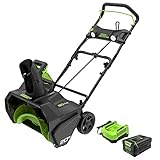 Greenworks 80V 20" Cordless Snow Blower
Best for quiet, gas-free clearing
- 20-inch path, up to 10 inches deep
- Quiet brushless motor
- Battery and charger included
 Westinghouse WSnow22 22" Corded Snow Blower
Best for walks and small driveways
- 15-amp motor, 22 x 13-inch path
- Rubber-tipped steel auger
- Dual LED lights, 180° chute
The right choice depends on how much snow you get, how big your driveway is, and how much noise and upkeep you will put up with. Electric covers two very different machines: corded models, which run as long as they are plugged in, and cordless (battery) models, which go anywhere but run only as long as the battery lasts. For budget gas options, see our cheap gas snow blowers; for battery models, our cordless snow blower picks; for corded models, our best electric snow blowers.
Electric vs Gas Snow Blowers at a Glance
| Corded electric | Cordless (battery) | Gas | |
|---|---|---|---|
| Best for | Light snow, walks and small driveways near an outlet | Light to moderate snow, small to mid-size driveways | Deep, wet snow, large or long driveways |
| Typical type | Single-stage | Single-stage (a few two-stage) | Single- or two-stage |
| Runtime | Unlimited, within cord reach | Limited by the batteries | As long as there is fuel |
| Starting | Push button | Push button | Pull cord or electric start |
| Upkeep | Almost none | Charge and store batteries indoors | Fuel, oil, spark plug, storage care |
| Noise | Quiet | Quiet | Loud |
Electric: pros and cons
Electric snow blowers are quiet, start with a button, need no fuel or oil and are light and easy to store. Corded models are the cheapest and never run out of power, but the extension cord limits your range. Cordless models move freely, but runtime depends on battery size, and cold or wet snow drains batteries faster. Most electric models are single-stage, so deep, wet or plowed-in snow is harder for them.
Gas: pros and cons
Gas snow blowers, especially two-stage models, take deeper snow in one pass, throw it farther and run as long as there is fuel, which makes them the choice for big driveways and heavy snow. In return they are louder, heavier and need regular maintenance: fresh fuel, oil changes and proper storage at the end of the season.
Our Picks: Gas, Cordless and Corded
1. PowerSmart 26-Inch 2-Stage Gas Snow Blower (208cc B&S, Electric Start)

The PowerSmart 26-inch two-stage snow blower has a 208cc Briggs & Stratton engine with a push-button electric start (plug in an extension cord) and a pull-start backup. It clears a 26-inch wide, 20-inch high path, throws snow up to 40 feet, and PowerSmart rates it for snow 6 to 12 inches deep on driveways of up to 10 cars. It is self-propelled forward and reverse on all-terrain snow tires, with a heated handle, one-hand 180° chute control and an LED headlight.
Pros
- 26-inch, two-stage clearing for deep and heavy snow.
- Electric start with pull-start backup; heated handle and LED headlight.
- 2-year warranty and a US repair service center.
Cons
- Heavy, and needs fuel, oil and storage care like any gas machine.
- Louder than an electric snow blower.
2. Greenworks 80V 20-Inch Brushless Cordless Snow Blower

The Greenworks 80V is a cordless single-stage snow blower with a brushless motor. It clears a 20-inch path up to 10 inches deep, and the chute rotates 180 degrees. The kit includes a 2.0Ah battery and a charger. Greenworks notes that cold batteries can affect starting, so keep the battery indoors at room temperature.
Pros
- Quiet brushless motor with no gas, oil or pull cord.
- 20-inch path and 180° chute.
- Battery and charger included; the battery fits other Greenworks 80V tools.
Cons
- The included 2.0Ah battery is small, so a big driveway or wet snow may need a second, larger battery.
- Single-stage: best for light to moderate snow on paved surfaces.
3. Westinghouse WSnow22 22-Inch Corded Electric Snow Blower

The Westinghouse WSnow22 is a corded electric snow blower with a 120V, 15-amp motor and a rubber-tipped steel auger. It clears a 22-inch wide, 13-inch deep path, moves up to 840 pounds of snow per minute and throws it up to 25 feet. It rolls on 7-inch wheels and has a 180° adjustable chute and dual LED headlights.
Pros
- Never runs out of battery: plug it in and go.
- Wide 22 × 13-inch path for a corded machine.
- 2-year limited warranty with lifetime technical support.
Cons
- You need an outdoor extension cord, and the cord limits your range.
- Single-stage: not for deep, wet or plowed-in snow.
4. EGO Power+ SNT2400 24-Inch Self-Propelled 2-Stage Snow Blower (Tool Only)

The battery-powered middle ground: the EGO Power+ SNT2400 is a self-propelled two-stage snow blower with a 24-inch clearing width, a 20-inch intake and a variable-speed steel auger, and EGO says it throws snow up to 50 feet. This listing is the tool only: the battery and charger are sold separately.
Pros
- Two-stage clearing without gas, oil or pull cord.
- Self-propelled, forward and reverse, push-button start.
Cons
- Battery and charger not included; EGO recommends two 7.5Ah batteries.
- Runtime: EGO rates it at up to an 18-car driveway with 8 inches of snow on two 7.5Ah batteries.
Buying Guide
When choosing between an electric and gas snow blower, there are several factors to consider to ensure that you get the best product for your needs. Here are some features to look at:
Power Source
The first and most obvious difference between electric and gas snow blowers is the power source. Electric snow blowers are powered by electricity, either from a cord or a rechargeable battery.
Gas snow blowers, on the other hand, are powered by gasoline. Electric snow blowers are generally quieter and more environmentally friendly, while gas snow blowers are typically more powerful and can handle larger areas.
Clearing Width
The clearing width is the width of the snow blower’s intake, and it determines how much snow the machine can clear in a single pass.
Electric snow blowers typically have a clearing width of 18-22 inches, while gas snow blowers can have a clearing width of up to 45 inches. Consider the size of your driveway or sidewalks when choosing the clearing width.
Clearing Depth
The clearing depth is the maximum depth of snow that the snow blower can handle. Electric snow blowers are generally better suited for light to moderate snowfalls, while gas snow blowers can handle heavier snowfalls.
Consider the average snowfall in your area when choosing the clearing depth.
Weight
Snow blowers can be heavy, so consider the weight of the machine when making your decision. Electric snow blowers are generally lighter than gas snow blowers, making them easier to maneuver and store.
Price
Electric snow blowers are generally less expensive than gas snow blowers, but they may not have the same level of power or clearing ability. Consider your budget when choosing between the two.
By considering these factors, you can make an informed decision when choosing between an electric and gas snow blower.
You might also be interested in checking out our top pick for the ATV snowblower attachment.
Electric vs Gas Snow Blower FAQs
Electric or gas snow blower: which is better?
Gas for deep, wet snow and large or long driveways; electric (corded or cordless) for light to moderate snow on smaller driveways, walks and decks.
What are the pros and cons of electric snow blowers?
Pros: quiet, no fuel or oil, push-button start, light and easy to store. Cons: corded models are limited by the cord; cordless runtime depends on the batteries; most are single-stage, so deep or wet snow is harder.
What are the advantages of a cordless two-stage snow blower over gas?
No fuel, oil or pull cord, quieter, push-button start and less maintenance, with two-stage clearing; but batteries are expensive and limit runtime (EGO rates its SNT2400 at up to an 18-car driveway with 8 inches of snow on two 7.5Ah batteries).
How much snow can an electric snow blower handle?
Most corded and cordless models clear 10 to 13 inches per pass (the Westinghouse WSnow22 lists 13 inches, the Greenworks 80V 10 inches); battery two-stage models handle more.
Is a gas snow blower more powerful?
Generally yes: two-stage gas machines like the PowerSmart 26-inch take a 20- to 21-inch intake and throw snow farther; they also need fuel, oil changes and winter storage care.
Corded or cordless electric?
Corded never runs out of power and costs less, but you manage an extension cord; cordless moves freely, but runtime depends on battery size.