

As an Amazon Associate, SkilledHub earns from qualifying purchases made through links on this page.
To help you find the best concrete grinder for your needs, we tested and researched several models on the market. Our top pick is the KSEIBI 711985 Concrete Grinder.
Our Top Picks at a Glance
 KSEIBI 711985 7-Inch Concrete Grinder Kit
Best for an all-in-one grinding kit
- 2400W motor at 6,000 RPM
- Dust shroud and protective guard included
- L-type and standard side handles
 DEWALT DWE4517 7-Inch Angle Grinder
Best for a grinder you can also cut with
- Dust ejection system protects the motor
- Low-profile gearcase for tight areas
- Cup wheel and shroud sold separately
 Makita PC5001C 5" Concrete Planer
Best for regular concrete surfacing
- Purpose-built for concrete
- 10-amp motor at 10,500 RPM
- Soft start for smoother starts
Concrete grinding is a process that involves smoothing rough surfaces with the help of a concrete grinder.
This tool is widely used in the construction industry for preparing concrete surfaces for painting, coating, or polishing. A concrete grinder is also useful for removing old paint, glue, or coatings from the concrete surface.
When looking for the best concrete grinder, there are a few critical things to consider.
Firstly, the type of concrete grinder you choose will depend on the size of the job. For small-scale projects, a handheld concrete grinder is sufficient, while larger projects require a walk-behind concrete grinder.
Secondly, the power of the grinder is an important factor to consider. The more powerful the grinder, the faster and more efficiently it can grind the concrete surface.
Another important consideration is the type of grinding wheel that comes with the grinder. There are various types of grinding wheels available, each designed for specific applications.
For example, diamond grinding wheels are ideal for grinding hard concrete surfaces, while silicon carbide grinding wheels are better suited for grinding softer concrete surfaces.
Our goal was to identify the grinders that offer the best combination of power, performance, and durability.
In the following section, we’ll discuss the top concrete grinders we found through our research and testing.
We’ll highlight the pros and cons of each model and provide you with all the information you need to make an informed decision.
Best Concrete Grinders
When it comes to smoothing rough surfaces, removing coatings, or preparing concrete for polishing, a concrete grinder is an essential tool.
With so many options available, it can be challenging to find the right one for your specific needs.
In this article, we’ve compiled a list of the best concrete grinders on the market based on their performance, durability, and user reviews.
Whether you’re a professional contractor or a DIY enthusiast, you’re sure to find the perfect grinder for your project on our list.
1. KSEIBI 711985 Concrete Grinder

If you’re looking for a powerful and versatile concrete grinder, the KSEIBI 711985 might be the right choice for you.
With its 2400W motor and 6000RPM performance, this grinder is perfect for various surface grinding tasks. Plus, it comes with a dust shroud system and protective guard to ensure a safer working environment.
Pros
- The 2400W motor delivers high efficiency and speed, making this grinder a great choice for professional contractors and DIY enthusiasts.
- The L Type and standard auxiliary handles provide enhanced control and precision during grinding operations.
- The package includes a protective guard and an advanced dust shroud system, ensuring a safer working environment by minimizing dust and debris during operation.
Cons
- The grinder is relatively heavy, which may make it challenging to use for extended periods.
- The 7-inch size may be too large for some grinding tasks, making it less versatile than other options.
- The price point is on the higher end, which may not be suitable for budget-conscious buyers.
The KSEIBI 711985 concrete grinder is a complete grinding solution that encompasses all essentials, including a high-performance angle grinder, dust extraction shroud, multiple handles, and a protective guard (check out the best pneumatic angle grinder).
The grinder is convenient and portable, thanks to the durable carrying bag that comes with it.
The grinder’s powerful performance and precision and control features make it an excellent choice for various surface grinding tasks.
The advanced dust shroud system and protective guard ensure a safer working environment, minimizing dust and debris during operation.
However, the grinder’s weight and size may make it challenging to use for extended periods, and the higher price point may not be suitable for budget-conscious buyers.
Overall, the KSEIBI 711985 concrete grinder is a reliable and versatile tool that can handle various grinding tasks with ease.
2. DEWALT 7-Inch Angle Grinder with Dust Ejection (DWE4517)

If you want a brand-name grinder you can build a concrete grinding setup around, the DEWALT DWE4517 is a strong pick. It is a 7-inch angle grinder with a dust ejection system, a low-profile gearcase for working in tight areas and a 2-position side handle. Fit it with a 7-inch diamond cup wheel and a dust shroud connected to a HEPA vacuum and it becomes a capable concrete surface grinder.
Pros
- Trusted brand with a wide service and parts network.
- Dust ejection system helps keep grit out of the motor during dusty work.
- 2-position side handle and low-profile gearcase make it easier to control.
Cons
- Sold as the grinder only: the diamond cup wheel and dust shroud are extra.
- A 7-inch grinder is heavy for long overhead or vertical work.
Overall, the DWE4517 is a good choice if you want a durable grinder you can also use for cutting and general metalwork. Always grind concrete with a shroud and a HEPA vacuum, since the dust contains silica.
3. Makita PC5001C 5″ Concrete Planer
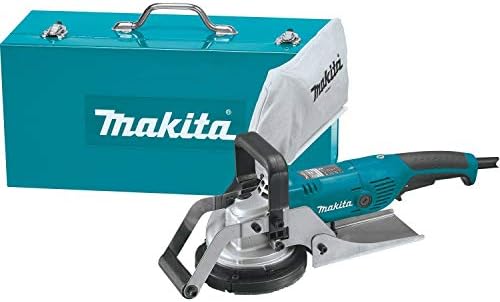
If you grind concrete often or professionally, the Makita PC5001C is a purpose-built concrete planer rather than an angle grinder with accessories. Its 10-amp motor runs at 10,500 RPM, and soft start reduces the jolt at start-up for more control and longer tool life.
Pros
- Purpose-built for concrete surfacing, not adapted from a general grinder.
- 10-amp motor at 10,500 RPM for fast material removal.
- Soft start for smoother, more precise starts.
Cons
- Costs several times more than an angle grinder setup.
- The 5-inch head covers less area per pass than 7-inch grinders.
Overall, the PC5001C is the premium pick for contractors and anyone surfacing concrete regularly. For occasional DIY jobs, a 7-inch grinder kit like the KSEIBI or the DEWALT above is far more affordable.
Buying Guide
When choosing the best concrete grinder, there are several factors to consider to ensure that you get the best value for your money.
Here are some essential features to look for when buying a concrete grinder:
Power and Speed
The power and speed of a concrete grinder are crucial factors to consider when buying one. The higher the power and speed, the faster and more effective the grinding process will be.
A grinder with a powerful motor and high speed will be able to handle tough concrete surfaces and remove coatings and stains with ease.
Size and Weight
The size and weight of a concrete grinder are also important considerations. A compact and lightweight grinder will be easier to maneuver and handle, making it ideal for smaller projects.
However, a larger and heavier grinder may be more suitable for larger projects and commercial use.
Grinding Discs
The type and quality of grinding discs used in a concrete grinder can significantly affect its performance.
Diamond grinding discs are the most common type of disc used for concrete grinding. They are durable, long-lasting, and provide excellent results.
It is essential to select the right type of grinding disc for the job, depending on the surface to be ground and the level of abrasiveness.
If you are looking for bench grinders, you might be interested in checking out the following guides:
Dust Collection
Concrete grinding can produce a lot of dust, which can be harmful to health and cause a mess. Therefore, it is essential to choose a grinder with an efficient dust collection system.
A good dust collection system will help to reduce the amount of dust produced during grinding and make the process cleaner and safer.
Price
The price of a concrete grinder is an important consideration for most buyers.
While it is essential to invest in a high-quality grinder, it is also important to find a product that offers good value for money.
Comparing prices and features of different models can help you find the best product for your needs and budget.
In conclusion, when buying a concrete grinder, it is essential to consider factors such as power and speed, size and weight, grinding discs, dust collection, and price.
By choosing a product that meets your needs and requirements, you can ensure that you get the best results and value for your investment.
Frequently Asked Questions
What factors should be considered when choosing a concrete grinder?
When choosing a concrete grinder, there are several factors to consider, including the size of the job, the type of concrete surface, the level of finish required, and the budget.
Other factors to consider include the type of abrasive used, the power source, and the weight and size of the machine.
You might also be interested in checking out the best die grinder.
How do you select the appropriate concrete grinder for a specific floor application?
The appropriate concrete grinder for a specific floor application depends on the surface area, the type of concrete, and the desired level of finish.
If you are working on a large surface area, a walk-behind model may be more efficient. For smaller areas or hard-to-reach places, a handheld model may be more suitable.
What are the advantages of using a handheld concrete grinder versus a walk-behind model?
The advantages of using a handheld concrete grinder include its portability, maneuverability, and ease of use. Handheld models are also typically less expensive than walk-behind models.
Walk-behind models, on the other hand, are more efficient for larger surface areas and can be equipped with vacuum attachments for dust control.
Which features are most important in a concrete floor grinder with vacuum attachment?
When selecting a concrete floor grinder with a vacuum attachment, it is important to consider the power of the vacuum, the filtration system, and the size of the dust collection bag.
A good vacuum attachment should be able to effectively capture dust and debris, while also being easy to clean and maintain.
How does an EDCO concrete grinder compare to other brands in terms of efficiency and reliability?
EDCO concrete grinders are known for their efficiency and reliability. They are designed to be durable and long-lasting, with features like sealed bearings and high-quality motors.
While there are other brands on the market, EDCO is a trusted name in the industry and is often the preferred choice of professionals.
What are the key differences between grinding concrete and epoxy floor surfaces?
Grinding concrete and epoxy floor surfaces requires different types of abrasives and techniques.
Concrete surfaces are typically harder and require more aggressive grinding, while epoxy surfaces are softer and require a finer grit abrasive.
Additionally, epoxy surfaces may require a primer or coating before grinding to ensure proper adhesion.